
 Insert HTML here
The Five Sons of Lord Vishwakarma and Their Legacy
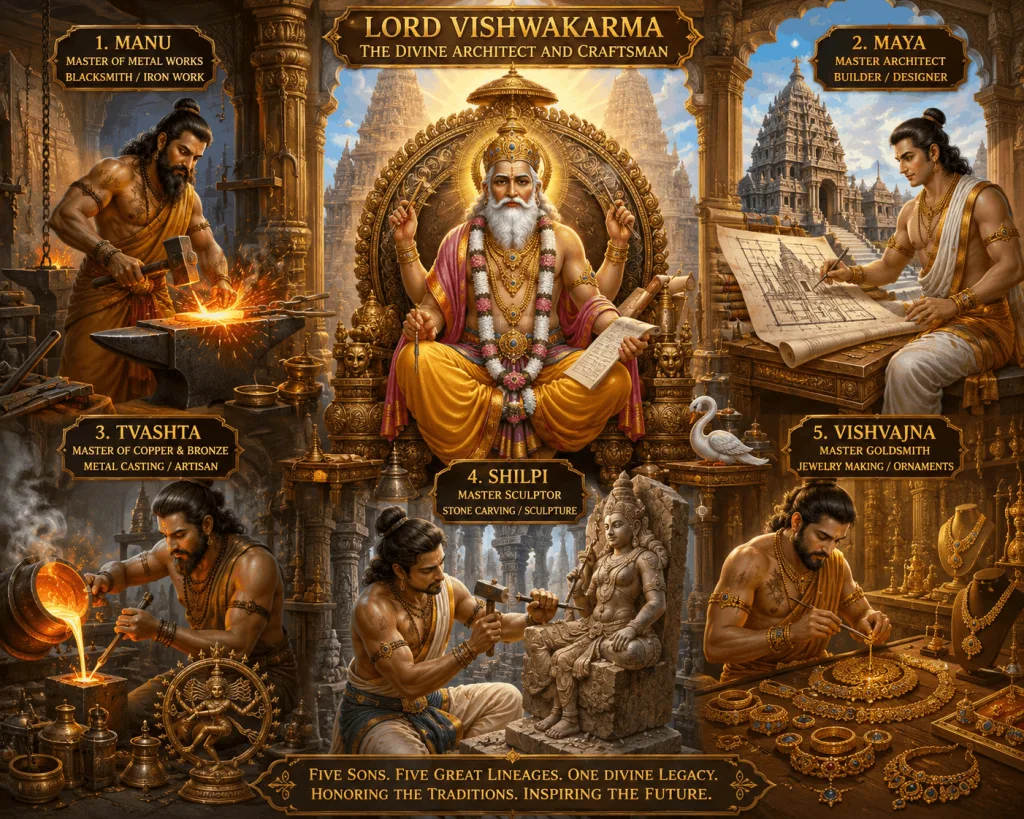
Exploring Traditional Lineages and Occupational Groups
The Five Sons of Lord Vishwakarma occupy a special place in the cultural memory and traditions of the Vishwakarma community. Across India, generations have preserved stories that connect various artisan and engineering professions to these legendary descendants of Lord Vishwakarma, the divine architect and celestial craftsman.
These traditions not only explain the origins of different occupational groups but also celebrate a shared heritage of creativity, craftsmanship, innovation, and service to society. While regional beliefs and interpretations may vary, the legacy of the Five Sons continues to inspire pride and unity among Vishwakarmas worldwide.
Who is Lord Vishwakarma?
Lord Vishwakarma is revered in Hindu tradition as the divine architect, engineer, sculptor, and creator of celestial structures. Ancient scriptures describe him as the master craftsman who designed magnificent cities, weapons, temples, and heavenly palaces.
Many artisan communities across India trace their traditional origins to Lord Vishwakarma, viewing him as the source of their skills, knowledge, and professional heritage.
“Craftsmanship is not merely a profession; it is a sacred legacy passed through generations.”
The Five Sons of Lord Vishwakarma
According to traditional Vishwakarma lineage narratives, Lord Vishwakarma had five sons, each associated with a particular craft, profession, or artisan tradition.
1. Manu – The Master of Metal Works
Manu is traditionally associated with blacksmiths and workers in iron and steel.
Traditional Occupation
- Iron forging
- Tool making
- Agricultural implements
- Weapon crafting
Legacy
The descendants associated with Manu played a vital role in supporting agriculture, construction, transportation, and defense throughout Indian history.
2. Maya – The Architect and Builder
Maya is often regarded as the master architect and builder.
Traditional Occupation
- Architecture
- Temple construction
- Civil structures
- Town planning
Legacy
The lineage associated with Maya contributed to the creation of temples, palaces, forts, and public structures that continue to stand as symbols of India’s architectural brilliance.
Many traditional temple architects (Sthapathis) are linked to this heritage.
3. Tvashta (Tvashtr) – The Master of Copper and Bronze Crafts
Tvashta is connected with metal artisans specializing in copper, bronze, and alloy work.
Traditional Occupation
- Bronze casting
- Copper work
- Metal sculpture
- Religious artifacts
Legacy
The artistic traditions linked to Tvashta produced many of India’s famous metal sculptures, lamps, utensils, and temple icons.
The lost-wax casting techniques practiced in several regions are often associated with this lineage.
4. Shilpi – The Sculptor and Stone Craftsman
Shilpi is traditionally associated with sculpture and stone carving.
Traditional Occupation
- Temple sculpture
- Stone carving
- Iconography
- Monument construction
Legacy
From ancient temples to intricate statues, the contributions of sculptors have shaped India’s artistic and spiritual landscape.
Many of the breathtaking carvings seen in historic temples reflect the skills preserved through generations of Shilpi craftsmen.
5. Vishvajna – The Master Goldsmith
Vishvajna is associated with goldsmiths and fine jewelry artisans.
Traditional Occupation
- Goldsmithing
- Jewelry making
- Precious metal crafting
- Ornament design
Legacy
The descendants connected to Vishvajna became renowned for creating exquisite jewelry, ceremonial ornaments, and artistic masterpieces that continue to be admired worldwide.
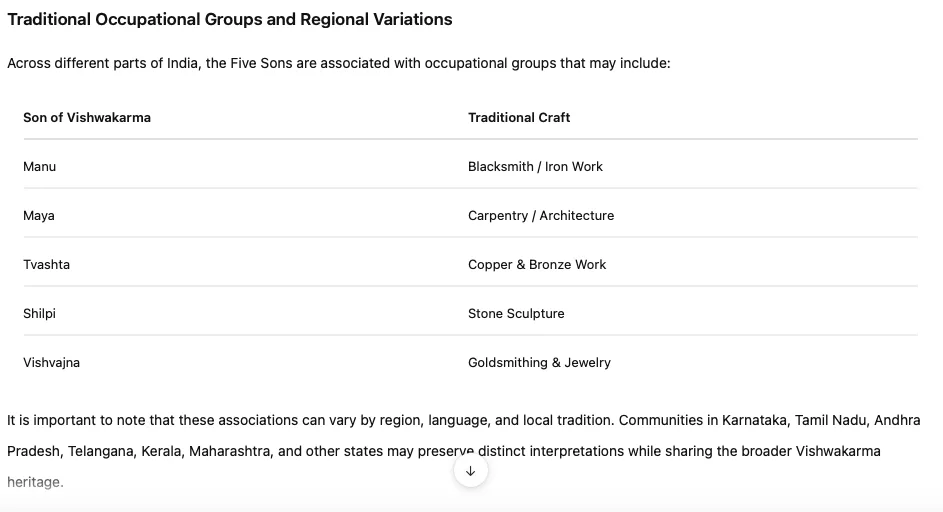
It is important to note that these associations can vary by region, language, and local tradition. Communities in Karnataka, Tamil Nadu, Andhra Pradesh, Telangana, Kerala, Maharashtra, and other states may preserve distinct interpretations while sharing the broader Vishwakarma heritage.
⸻
Cultural Significance of the Five Lineages
The story of the Five Sons represents more than occupational classification.
It reflects:
1. Respect for skilled craftsmanship. 2. The transmission of knowledge across generations. 3. The integration of art, science, engineering, and spirituality. 4. The contribution of artisans to India’s civilization. 5. A shared identity among diverse Vishwakarma communities.
Today, many members of the community have expanded beyond traditional occupations into engineering, technology, manufacturing, design, entrepreneurship, education, and research, while still honoring their ancestral roots.
⸻
A Legacy that Continues into the Modern Age
The spirit of the Five Sons of Lord Vishwakarma can still be seen today:
* Engineers designing smart cities. * Architects creating sustainable buildings. * Industrial designers developing new products. * Jewelers preserving artistic traditions. * Sculptors blending heritage with modern expression. * Technologists innovating for future generations.
The tools may have changed, but the values of creativity, precision, and innovation remain unchanged.
⸻
Community Reflection
How does your family trace its Vishwakarma heritage?
Do your ancestors belong to one of the traditional artisan lineages associated with Manu, Maya, Tvashta, Shilpi, or Vishvajna?
We invite members of the global Vishwakarma community to share family stories, regional traditions, and historical insights in the comments section.
Your contribution can help preserve our collective heritage for future generations.
Conclusion
The Five Sons of Lord Vishwakarma symbolize the diverse skills and traditions that have enriched Indian civilization for centuries. Whether through architecture, sculpture, metallurgy, carpentry, or jewelry making, these lineages represent a remarkable legacy of craftsmanship and innovation.
As the Vishwakarma community continues to evolve across the world, understanding these traditional roots helps strengthen cultural identity while inspiring future generations to carry forward the spirit of creativity and excellence.
Join the Conversation
✔ Share this article with family and friends. ✔ Comment with your regional traditions and family history. ✔ Contribute articles, photographs, and stories to Viswakarma.info. ✔ Help preserve and celebrate our shared heritage.