
 Insert HTML here
Vishwakarma Contributions to Indian Temple Architecture: Master Builders of India
Introduction
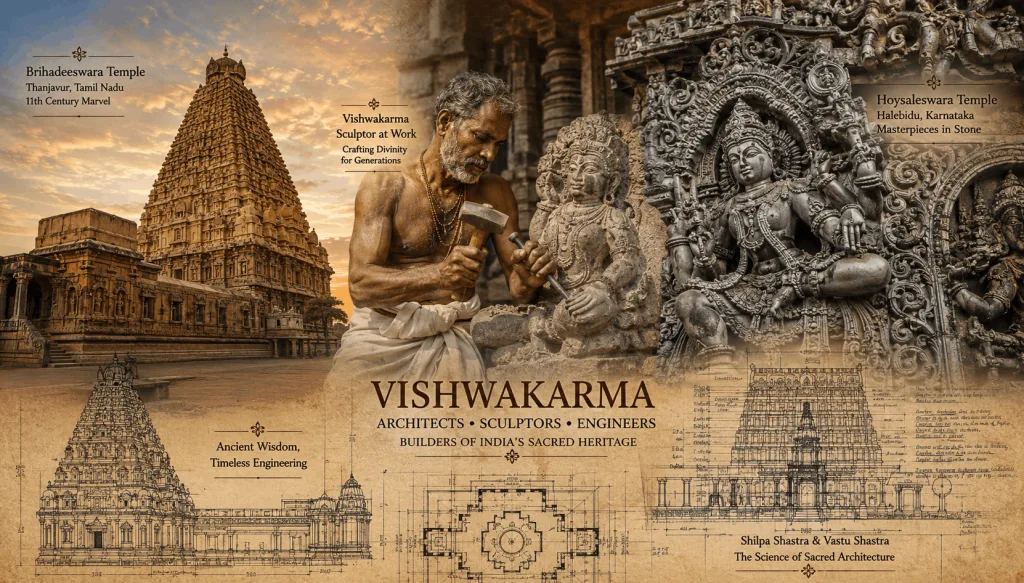
The story of Indian temple architecture cannot be told without recognizing the remarkable contributions of the Vishwakarma community. For centuries, generations of Vishwakarma artisans, sculptors, architects, metalworkers, and engineers transformed stone, wood, and metal into some of India’s most breathtaking temples and monuments.
Across India, from the towering temples of Tamil Nadu to the intricate stone carvings of Karnataka and Odisha, Vishwakarma craftsmen preserved sacred traditions while advancing architectural and engineering excellence. Their work reflects not only technical mastery but also devotion, creativity, and cultural identity.
Today, many of these architectural wonders continue to inspire architects, historians, artists, and devotees worldwide.
The Divine Connection Between Vishwakarma and Temple Architecture
According to Hindu tradition, Lord Vishwakarma is revered as the divine architect of the universe. He is credited with designing celestial cities, palaces, weapons, and sacred structures for the gods.
Inspired by this legacy, generations of Vishwakarma communities became custodians of:
Temple architecture (Sthapati tradition)
- Stone sculpture
- Bronze casting
- Wood craftsmanship
- Gold and silver ornamentation
- Structural engineering
Their skills were passed through family lineages and guild systems, preserving ancient knowledge for thousands of years.
The Role of Vishwakarma Communities in Temple Construction
Master Architects (Sthapatis)
The Sthapati served as the chief architect responsible for:
- Site selection
- Temple planning
- Sacred geometry
- Structural design
- Construction supervision
Temple layouts followed principles described in:
- Vastu Shastra
- Shilpa Shastra
- Agama texts
These systems combined spirituality, mathematics, astronomy, and engineering.
Sculptors and Stone Carvers
Temple sculptors transformed granite, sandstone, and marble into intricate depictions of:
- Hindu deities
- Mythological stories
- Dancers and musicians
- Floral patterns
- Sacred symbols
Many sculptures remain astonishingly detailed even after centuries.
Metal Artisans
Vishwakarma bronze and metal artisans created:
- Temple bells
- Ritual objects
- Bronze idols
- Gold-plated temple ornaments
- Sacred lamps
The famous Chola bronzes remain among the finest achievements of Indian metallurgy.
Famous Temples Associated with Vishwakarma Craftsmanship
Brihadeeswara Temple, Thanjavur
Built during the reign of Raja Raja Chola I in the 11th century, the Brihadeeswara Temple stands as one of India’s greatest engineering achievements.
Highlights include:
- Massive granite construction
- Towering 216-foot vimana
- Precision stone placement
- Exceptional sculptural detail
Even modern engineers admire the methods used to construct this monument.
Meenakshi Amman Temple, Madurai
Known for its colorful gopurams and detailed sculptures, this temple showcases generations of artisan expertise.
Notable features:
- Thousands of sculpted figures
- Complex structural planning
- Artistic integration of mythology and architecture
Hoysaleswara Temple, Halebidu
This Karnataka masterpiece is famous for its extraordinary soapstone carvings.
Features include:
- Intricate narrative panels
- Geometric precision
- Detailed depictions of epics
- Exceptional sculptural craftsmanship
The temple remains a benchmark of medieval Indian artistry.
Konark Sun Temple, Odisha
Designed in the form of a colossal chariot dedicated to Surya, the Sun God.
Engineering marvels include:
- Astronomical alignment
- Precision stone carving
- Massive stone wheels functioning as sundials
- Advanced structural planning
Virupaksha Temple, Hampi
Part of the historic Vijayanagara capital, this temple demonstrates the sophisticated planning and artistic excellence of South Indian temple builders.
Legendary Vishwakarma Sculptors and Architects
Kunjara Mallan Raja Raja Perunthachan
Widely recognized as the chief architect associated with the Brihadeeswara Temple.
His work demonstrates:
- Advanced engineering knowledge
- Monumental planning capabilities
- Exceptional understanding of sacred architecture
The Perunthachan Tradition
In Kerala, the legendary Perunthachan is celebrated as a master architect and craftsman.
Stories about Perunthachan continue to inspire architects and artisans throughout South India.
Ganapati Sthapati
One of modern India’s most respected temple architects.
His contributions include:
- Revival of traditional Vastu principles
- Preservation of ancient architectural knowledge
- Design of numerous temples worldwide
He played a significant role in bringing traditional Vishwakarma architectural wisdom into the modern era.
Engineering Marvels Created by Vishwakarma Craftsmen
Precision Without Modern Technology
Ancient temple builders achieved remarkable accuracy using:
- Hand tools
- Geometry
- Astronomy
- Traditional measurement systems
Many temples remain structurally sound after hundreds of years.
Interlocking Stone Construction
Several historic temples were constructed using interlocking stone techniques without modern cement.
Benefits included:
- Earthquake resistance
- Long-term durability
- Structural stability
Astronomical Alignment
Many temples were designed to align with:
- Solstices
- Equinoxes
- Sunrise and sunset positions
- Celestial events
These alignments demonstrate advanced scientific understanding.
Cultural Significance for the Vishwakarma Community
Temple architecture represents more than artistic achievement. It reflects:
- Generational knowledge
- Spiritual devotion
- Community identity
- Technical excellence
- Cultural preservation
The legacy of Vishwakarma artisans continues to inspire engineers, architects, designers, and craftsmen around the world.
“A temple is not merely built; it is envisioned, measured, carved, and consecrated through generations of wisdom.”
Preserving the Legacy for Future Generations
As India modernizes, preserving traditional craftsmanship becomes increasingly important.
The Vishwakarma community can contribute by:
- Documenting family histories
- Recording traditional techniques
- Supporting artisan training programs
- Promoting heritage education
- Sharing community stories through digital platforms
Conclusion
The magnificent temples of India stand as enduring monuments to the creativity, devotion, and engineering brilliance of Vishwakarma artisans. From master architects and sculptors to metalworkers and craftsmen, their contributions have shaped India’s cultural and spiritual landscape for centuries.
As members of the global Vishwakarma community, preserving and celebrating this heritage is both a responsibility and an opportunity. By sharing these stories, we ensure that future generations continue to draw inspiration from the extraordinary achievements of their ancestors.
Join the Conversation
Do you know of a temple, architect, sculptor, or artisan from the Vishwakarma community whose story deserves recognition?
Share your thoughts, family histories, photographs, or local traditions in the comments below. Together, we can preserve and celebrate the rich legacy of Vishwakarma heritage.